Wonder Teller
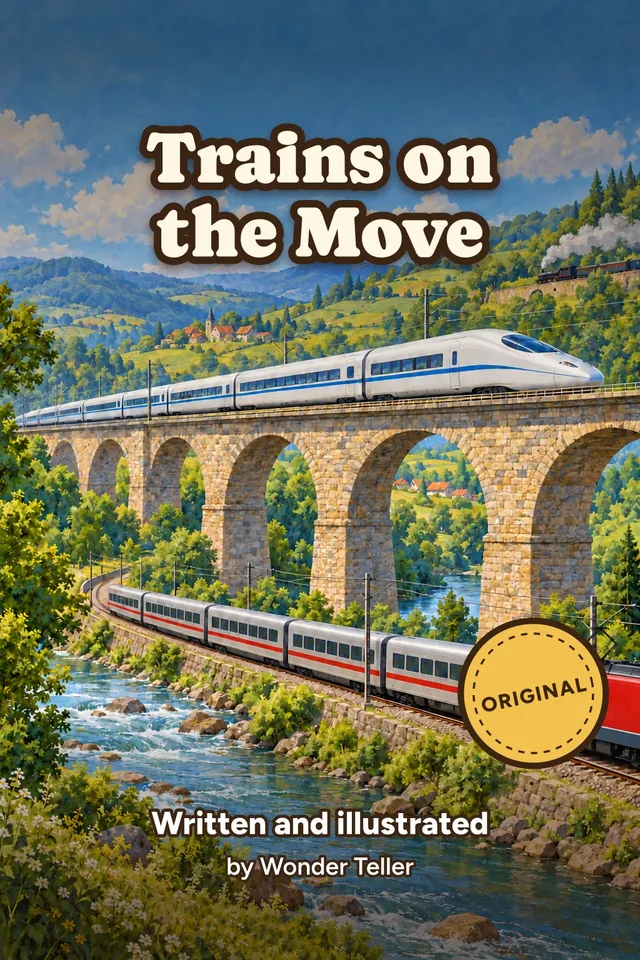
Cover of Trains on the Move
DiscoveryPicture bookLevel 5Ages 6–8

Trains on the Move

English · 30 pages · 3,306 words · 26 min read

Find out how track, steel wheels, and steam, diesel, and electric power move a long, heavy train, ride along with one family from the station hall across crossings, tunnels, and bridges while brakes, switches, and signals keep everyone safe, then meet freight trains, subways, mountain trains, bullet trains, and maglev, and follow the story of trains from stone grooves to high-speed rail.

Read first 4 pages
Written by
Wonder Teller

A look inside

The opening of Trains on the Move, free to read.

  1. Illustration from page 2 of Trains on the Move

    Meet the train

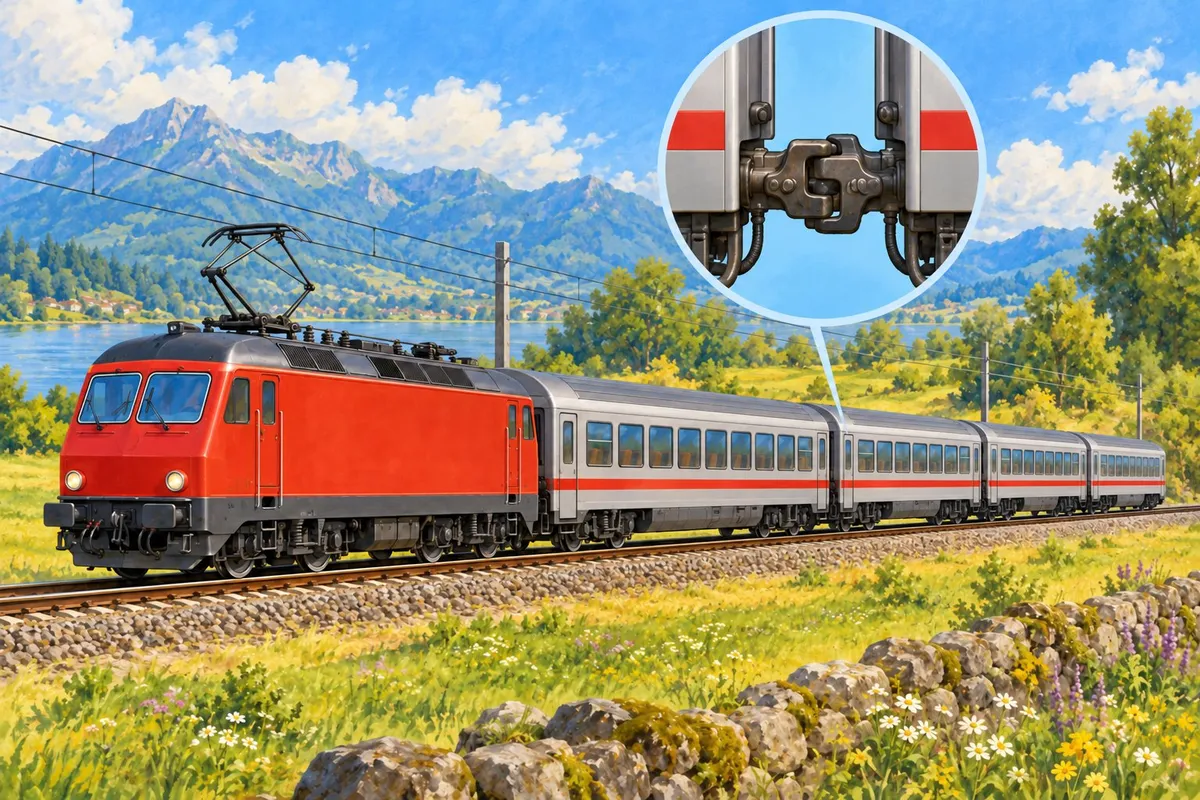
    1. The locomotive is the engine car, usually at the front. A locomotive has the machinery that pulls or pushes the whole train.

    2. Passenger cars carry people. The locomotive and all the cars linked behind it together make a train.

    3. Strong metal hooks called couplers join each car to the next one, like hands holding tight.

    4. Every car rolls on steel wheels. Most railroad cars have eight wheels, four near each end.

    5. A train runs on a track made of two steel rails. The track is the train's own road.

  2. Illustration from page 3 of Trains on the Move

    The track

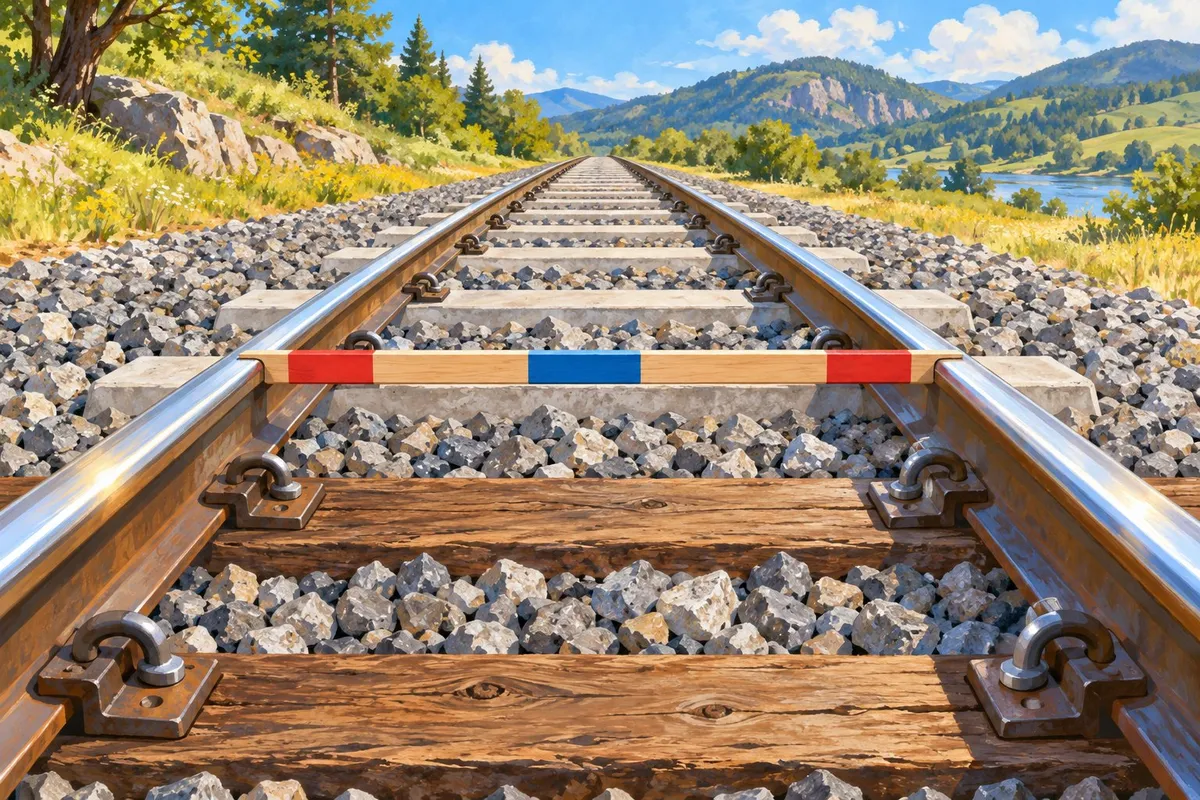
    1. Rails are long bars of steel. Rails are welded or bolted together end to end so they can stretch for miles.

    2. The rails rest on wooden or concrete beams called ties. Ties keep the two rails exactly the right distance apart.

    3. Wooden or concrete ties sit in a deep bed of crushed stone called ballast. Ballast holds the ties in place, spreads out the train's heavy weight, and lets rainwater drain away.

    4. Metal clips or spikes fasten steel rails tightly to the wooden or concrete beams beneath them, called ties.

    5. The space between the two rails is called the gauge. On most railroads in the United States, the rails are 4 feet 8 and a half inches apart.

  3. Illustration from page 4 of Trains on the Move

    Steel wheels on steel rails

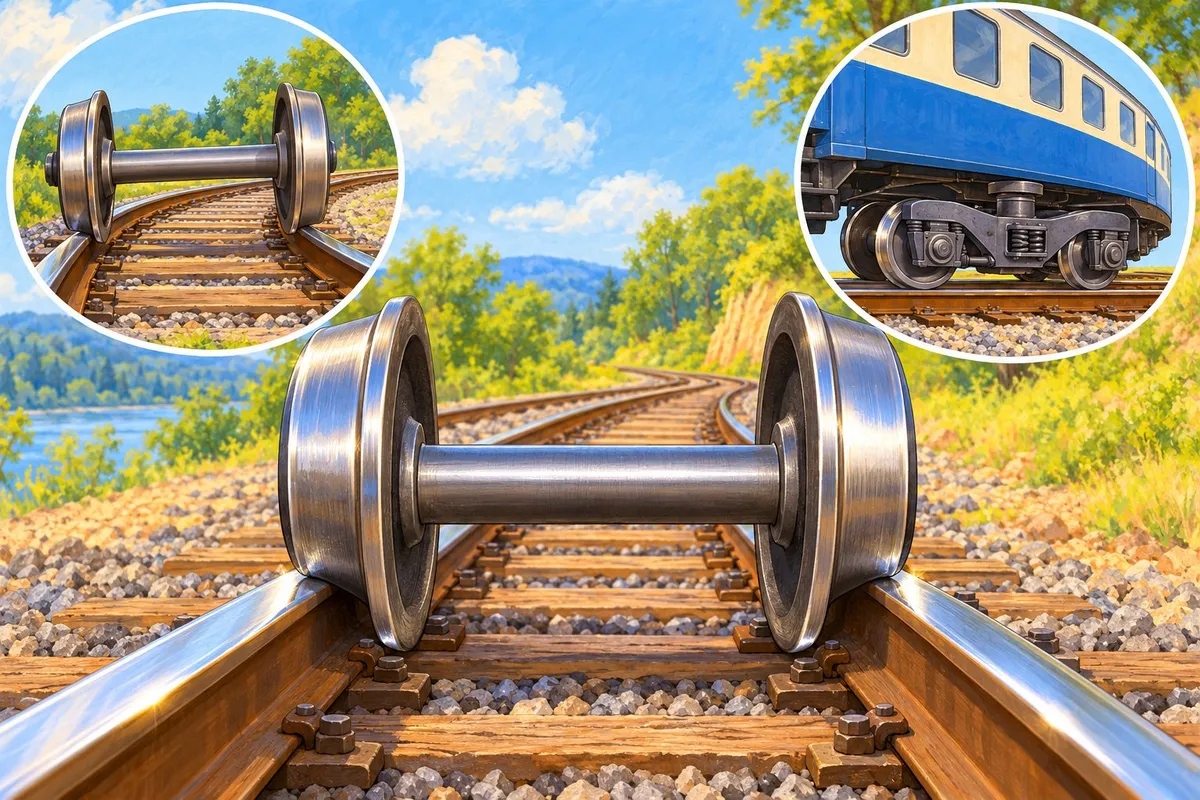
    1. Each train wheel has a raised rim on its inside edge called a flange. The flanges keep the wheels from sliding off the rails.

    2. Two train wheels are fixed to one solid steel bar called an axle, so both wheels always turn together.

    3. Train wheels are shaped a little like cones, wider near each wheel's flange, the raised rim on its inside edge. On a curve, the pair of wheels slides toward the outside rail. The outside wheel then rolls on its wider part and goes farther with each turn, which helps the train follow the curve.

    4. Under each end of a car, a frame holds two pairs of wheels. The frame can swivel, so the long car can bend around curves.

    5. A hard steel wheel on a hard steel rail rolls very easily, with little rubbing to slow it down. That is why one locomotive can pull a load much heavier than a truck can carry.

    Try it

    Steel wheels on steel rails

    Bend the track with Curve, then try flat wheels. Watch where each wheel touches its rail.

    Try it plays here in your browser.