Wonder Teller
Cover of Machines in Space
DiscoveryPicture bookLevel 5Ages 6–8

Machines in Space

English · 38 pages · 4,781 words · 37 min read

Find out how rockets climb into orbit and fly back home, meet the satellites that carry messages, find the way, and watch the weather, ride along with a crew to the space station and back, then follow the story of spaceflight from the first satellite to landers on the Moon and Mars.

Read first 4 pages
Written by
Wonder Teller

A look inside

The opening of Machines in Space, free to read.

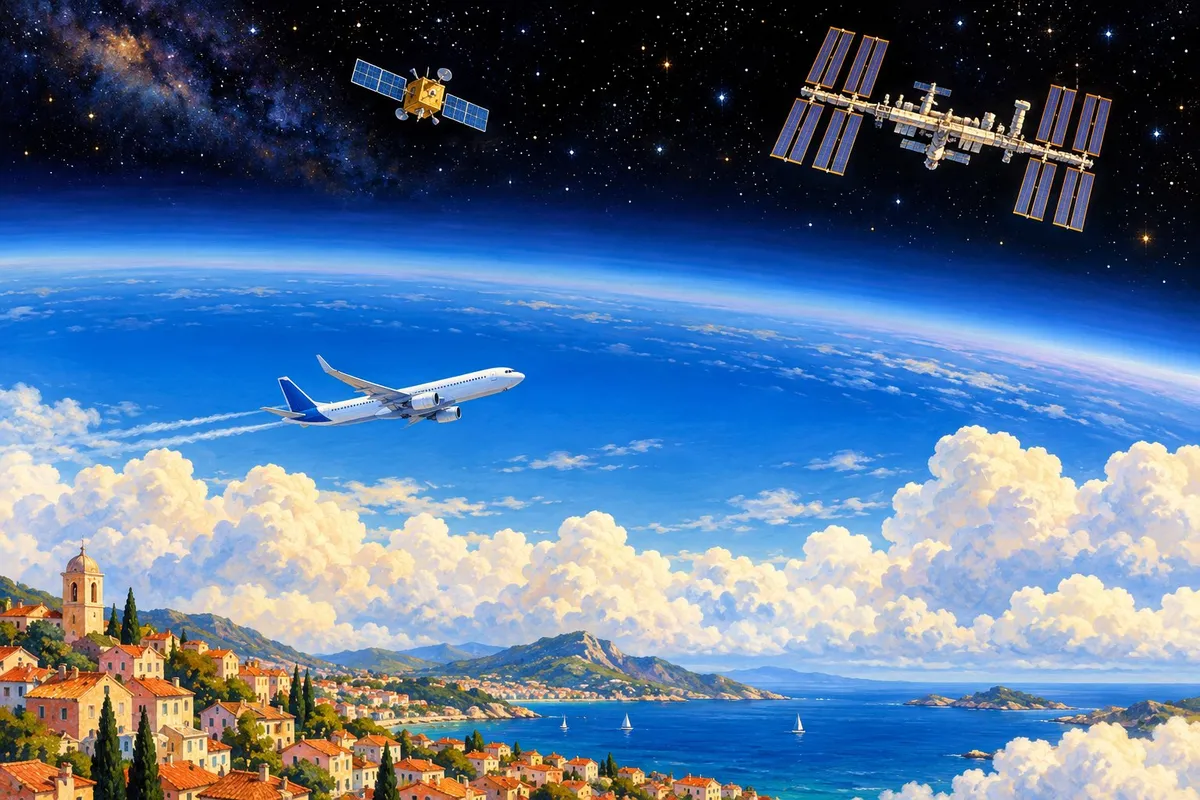
  1. Illustration from page 2 of Machines in Space

    Where space begins

    1. Air is thickest near the ground. The higher up you go, the thinner the air gets, until there is almost none at all.

    2. Airliners fly about 6 or 7 miles up, where there is still enough air for their wings and engines to work.

    3. Many scientists say space begins about 62 miles up. If a car could drive straight up at highway speed, it would get there in about an hour.

    4. High above the air, the sky looks black even in the daytime, because there is almost no air to spread the sunlight around.

    5. Space stations, where astronauts live and work, and many satellites, machines that do jobs in space, fly a few hundred miles up, far above the edge of space.

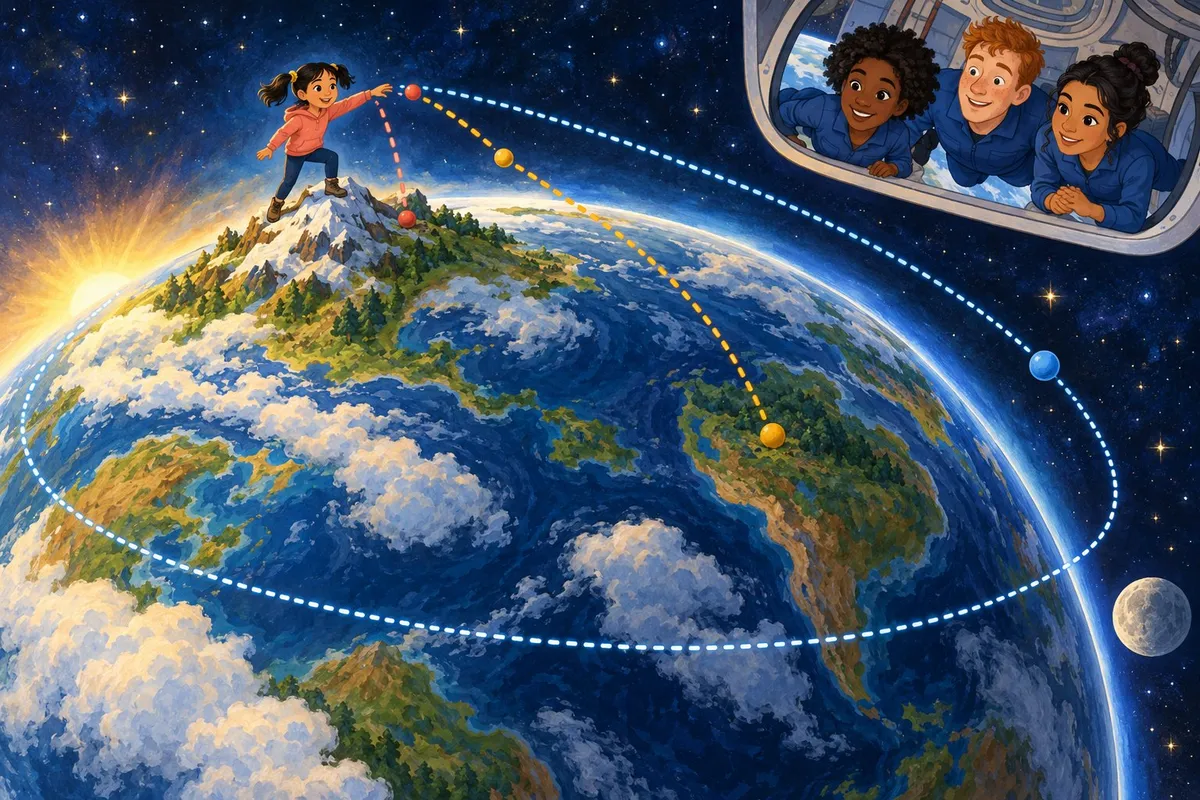
  2. Illustration from page 3 of Machines in Space

    Falling around Earth

    1. A ball thrown gently falls to the ground close by, pulled down by gravity. A ball thrown faster travels farther before it lands, because the round Earth curves away beneath it.

    2. If something moved fast enough, the ground would keep curving away as fast as the thing fell. The thing would keep falling around Earth without ever landing. That path around Earth is called an orbit.

    3. To stay in orbit close to Earth, a spacecraft must fly about 17,500 miles an hour. At that speed, a spacecraft goes all the way around Earth in about an hour and a half.

    4. Astronauts float inside a spacecraft in orbit because the astronauts and their spacecraft are falling around Earth together. Gravity is still pulling on them.

    Try it

    Falling around Earth

    Throw the ball from the mountaintop: flick it, or pick a Throw speed and press Throw. How fast must it go to fall all the way around Earth?

    Try it plays here in your browser.

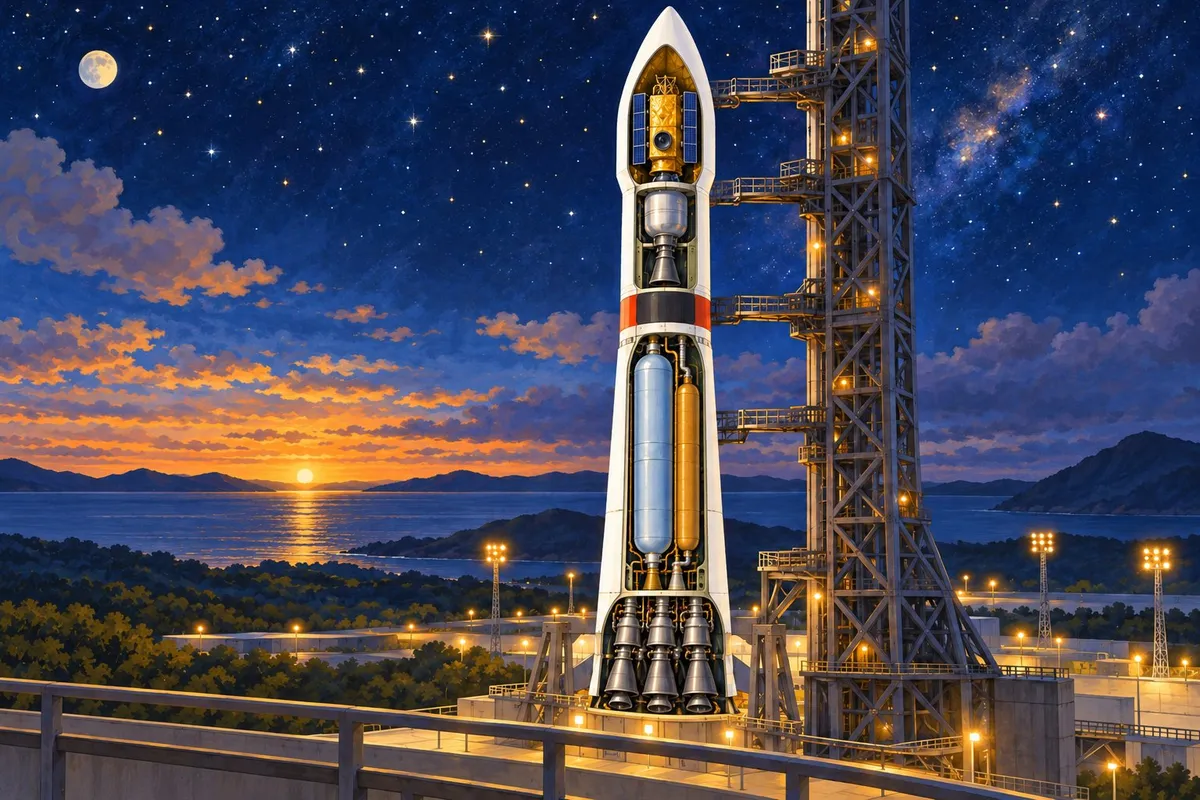
  3. Illustration from page 4 of Machines in Space

    Meet the rocket

    1. A rocket is built in parts called stages, stacked one on top of another, each with its own tanks and engines. The tall bottom part, called the first stage, holds most of the rocket's fuel and does the hardest work at liftoff.

    2. Many rockets carry a satellite into orbit. Satellites take pictures, carry messages, and do many other jobs.

    3. At the very top, a smooth, pointed cover called the fairing protects the satellite from the rushing air during launch.

    4. At the bottom, rocket engines blast out hot gas to push the rocket up.