Wonder Teller
Cover of Electricity Takes a Path
DiscoveryPicture bookLevel 5Ages 6–8

Electricity Takes a Path

English · 27 pages · 2,220 words · 18 min read

Follow electrical energy from a flashlight circuit to generators, solar panels, power lines, and everyday machines. Discover voltage, resistance, current, and power, then learn how to stay safe around electricity.

Read first 4 pages
Written by
Wonder Teller

A look inside

The opening of Electricity Takes a Path, free to read.

  1. Illustration from page 2 of Electricity Takes a Path

    A light that waits

    1. Inside the blanket fort, the paper star is hard to see. The child aims a flashlight at it, but nothing shines yet. The flashlight has everything it needs to make light. What is it waiting for?

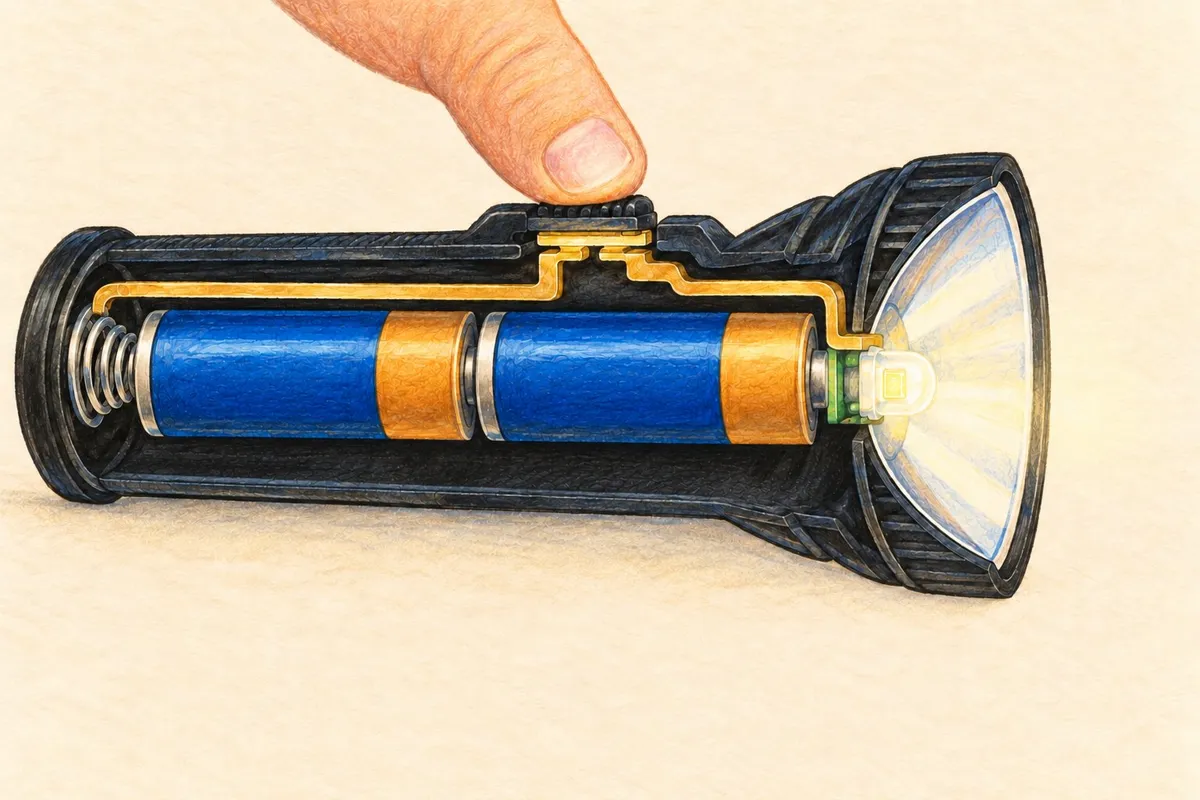
    2. A thumb rests above the switch. What might happen when it moves? The answer is hidden inside the flashlight. Let's open an imaginary one and follow the path that makes a beam of light.

  2. Illustration from page 3 of Electricity Takes a Path

    What is inside?

    1. Inside the tube are batteries, metal pieces, a switch, and a tiny light called an LED. Each part has a job, but no part can light the star on its own.

    2. The metal pieces touch one another in a particular order, making a route from the batteries to the light and back. We call this complete route a circuit.

    3. The child presses the switch. A metal piece joins two metal touch points that were apart. Now the circuit has no gap.

    4. The LED turns some electrical energy into light, and its beam lands on the paper star. The switch did not make energy; it joined the path that lets energy from the batteries reach the light.

    Try it

    What is inside?

    Close the gap: tap the switch.

    Try it plays here in your browser.

  3. Illustration from page 4 of Electricity Takes a Path

    Energy packed away

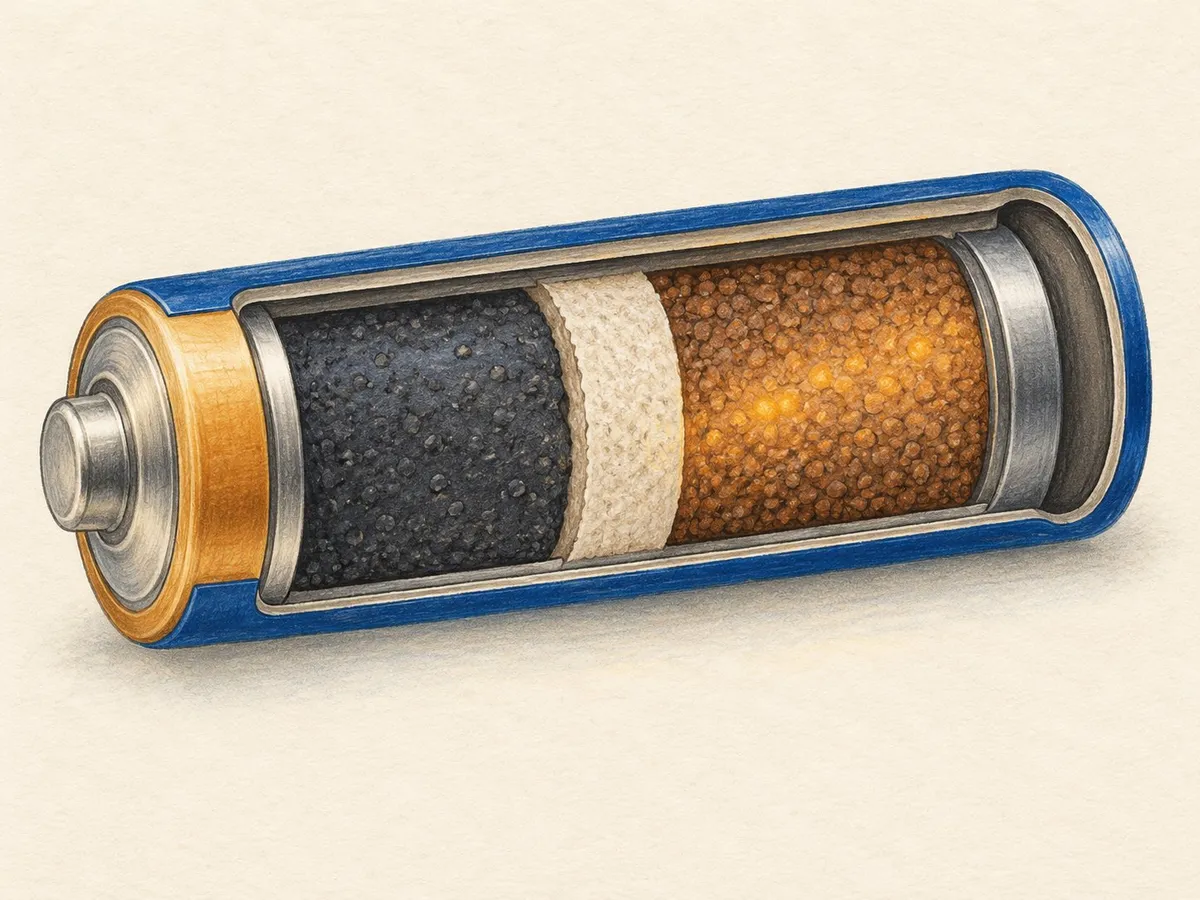
    1. A battery stores energy in its materials. When it works, chemical changes inside push electric charge through a circuit. Charge moves as tiny bits, far too small to see, that can travel through metal.

    2. A battery has two ends. You may see a plus mark at this end.

    3. You may see a minus mark at the other end. Both ends must become part of the path. One end alone cannot run the flashlight.