Wonder Teller
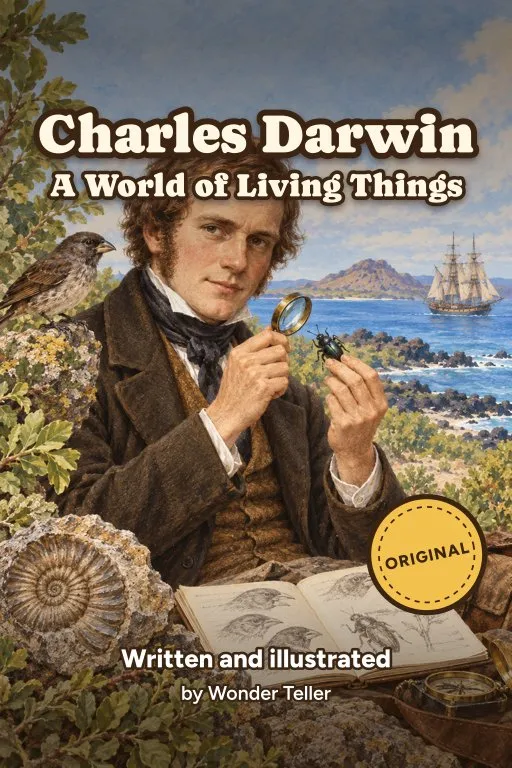
Cover of Charles Darwin: A World of Living Things
BiographyPicture bookLevel 5Ages 6–8

Charles Darwin: A World of Living Things

English · 25 pages · 1,450 words · 12 min read

An illustrated factual biography for ages 6–8 that follows Charles Darwin’s collecting and experiments through the Beagle evidence, Gould’s bird comparison, patient work with barnacles and pigeons, and an explanation independently reached by Alfred Russel Wallace.

Read first 4 pages
Written by
Wonder Teller
Illustrated by
Wonder Teller illustration studio
A look inside

The opening of Charles Darwin: A World of Living Things, free to read.

  1. Illustration from page 2 of Charles Darwin: A World of Living Things

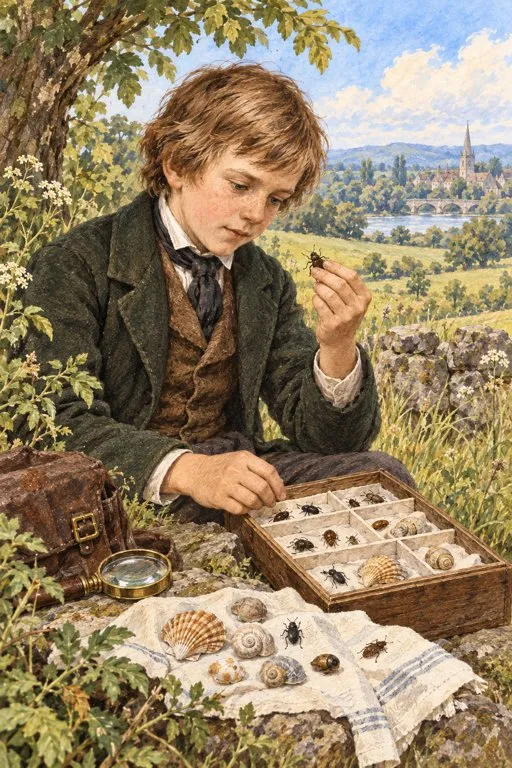
    As a boy in England, Charles Darwin collected insects, shells, plants, and rocks. He explored nearby fields and woods and read books about nature. Each find gave him another piece of nature to look at closely. Some looked alike; some did not. The habit of keeping and comparing what he found stayed with him.

  2. Illustration from page 3 of Charles Darwin: A World of Living Things

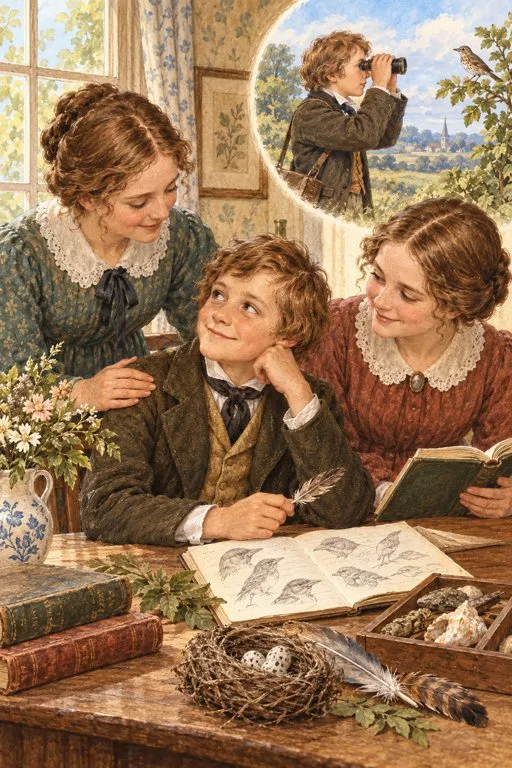
    When Charles was a child, his mother died. His older sisters cared for him through that sad time. He kept walking outdoors, watching birds and collecting beetles. He went on looking closely at the natural world. His family’s care and his own collecting both belonged to his childhood.

  3. Illustration from page 4 of Charles Darwin: A World of Living Things

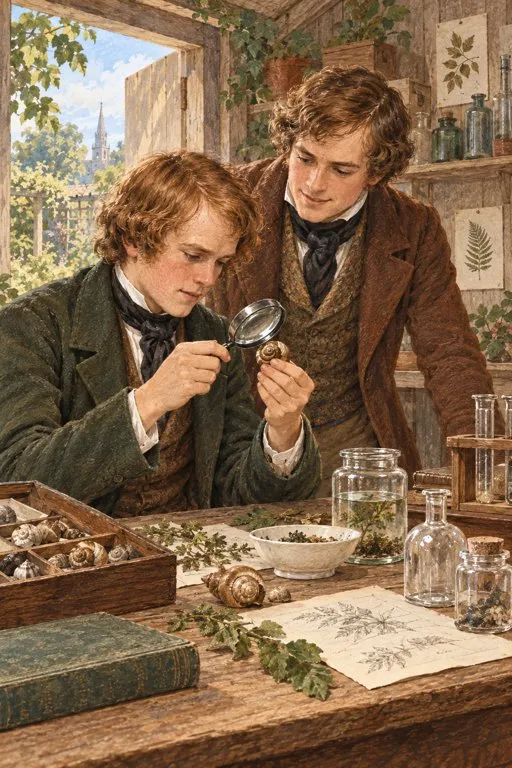
    Charles and his brother Erasmus set up a little chemistry laboratory in a garden shed. Chemistry studies what things are made of and how they change. The brothers tested minerals and mixed chemicals, sometimes making strong smells. Charles was learning to do more than collect: he could try something, observe the result, and test again. That careful habit would help on a much larger trip.